📌 Disclaimer
Prices, schedules, tour details, flight routes, visa requirements, and all other information on this page are based on data at the time of writing. Fares, availability, and policies may change. Please verify current details on the official website before booking.
Why Visit Heraklion?#
The smell of grilled lamb fat and wild oregano drifts from an alleyway while a waiter drags a heavy wooden chair across the concrete sidewalk, the legs making a low, scraping groan against the morning quiet. This is Crete’s largest city, a place that often gets dismissed as a mere ferry port or an airport gateway, which works entirely in your favor. Travelers rushing off to the famous southern beaches or mountain villages tend to skip the capital, leaving its shaded squares and Venetian ramparts remarkably free of tourist crowds.
Unlike the postcard-perfect whitewashed islands of the Cyclades, Heraklion is gritty, proud, and unapologetically lived-in. It is a working Mediterranean city where ancient Byzantine churches share street corners with modern coffee shops, and where old men sit outside playing tavli while discussing politics over small cups of thick Greek coffee. The city demands a bit of patience from American visitors accustomed to manicured tourist strips, rewarding those who take the time to notice the details—the laundry lines strung across narrow Venetian-era lanes, the fresh fish markets displaying morning catches on beds of crushed ice, and the sheer scale of history layered into every block.
Beyond the urban grit lies a deeply welcoming atmosphere driven by Cretan hospitality, known locally as filoxenia. Service here is direct rather than overly theatrical, and conversations with tavern owners often stretch past the final check as they pour complimentary rounds of iced raki. By anchoring your trip in Heraklion, you gain access to some of the most significant archaeological sites in the southern Aegean, alongside an everyday Cretan lifestyle that moves to its own unhurried rhythm.
Best Time to Visit Heraklion#
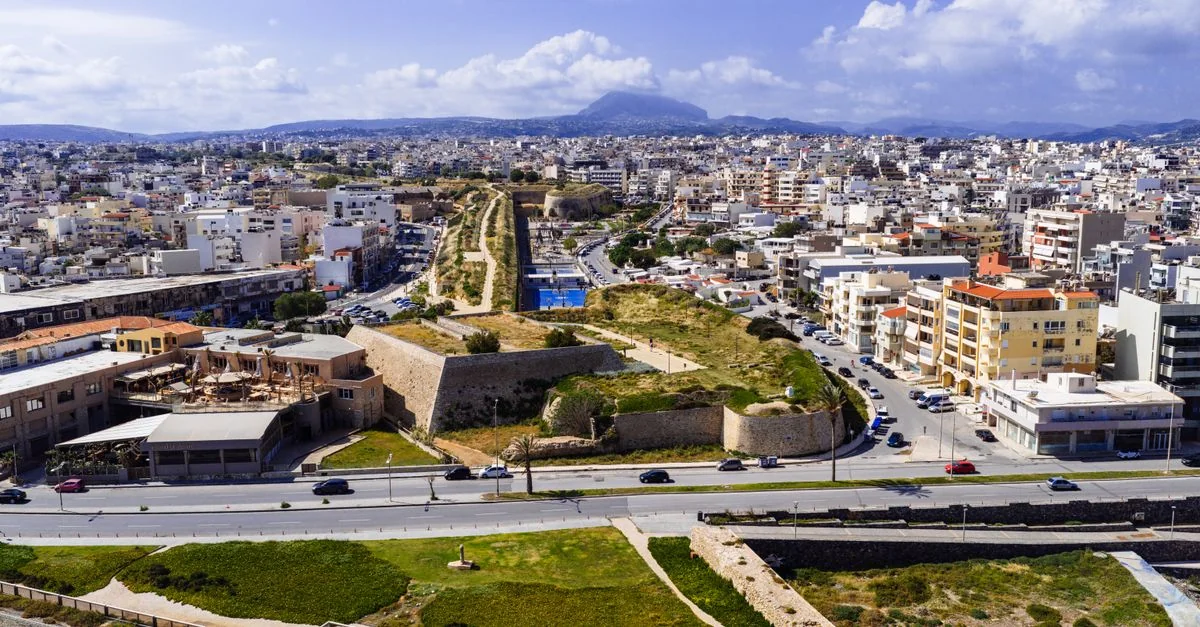
Timing your trip correctly shapes your entire experience on the island, as the Mediterranean climate swings dramatically between mild, damp winters and scorching, dry summers. Late spring, specifically spanning May and June, offers the most balanced weather for American travelers hoping to explore archaeological ruins without melting under the midday sun. Daytime temperatures hover comfortably in the upper seventies, wildflowers bloom along the edges of the ancient ruins, and the sea warms up enough for afternoon swimming. Crowds remain manageable during these months, and accommodation rates sit at reasonable mid-season levels before the July surge.
July and August bring intense heatwaves, with temperatures frequently pushing past ninety-five degrees Fahrenheit, paired with gusty northern winds known locally as the meltemi. These summer months mark the peak European vacation season, meaning flights and accommodations hit their highest prices of the year, popular sites draw massive tour bus crowds, and midday hours require retreating indoors or to the shade of a seaside café. If you visit during this peak period, plan your outdoor sightseeing for the early morning hours and embrace the local habit of an afternoon rest.
September and October provide a wonderful second wind for travelers. The scorching heat of August begins to break by mid-September, the Mediterranean remains warm enough for daily beach trips, and the annual grape harvest brings a lively energy to the surrounding countryside. Tourist numbers drop significantly after schools reopen across Europe and North America , leading to better availability and more negotiable pricing for rental cars and central apartments. Winter brings cooler, rainier weather with daytime highs in the sixties, and while many resort areas on the coast shut down entirely, Heraklion remains a functioning city with authentic local life continuing year-round at budget-friendly prices.
Where to Stay in Heraklion#
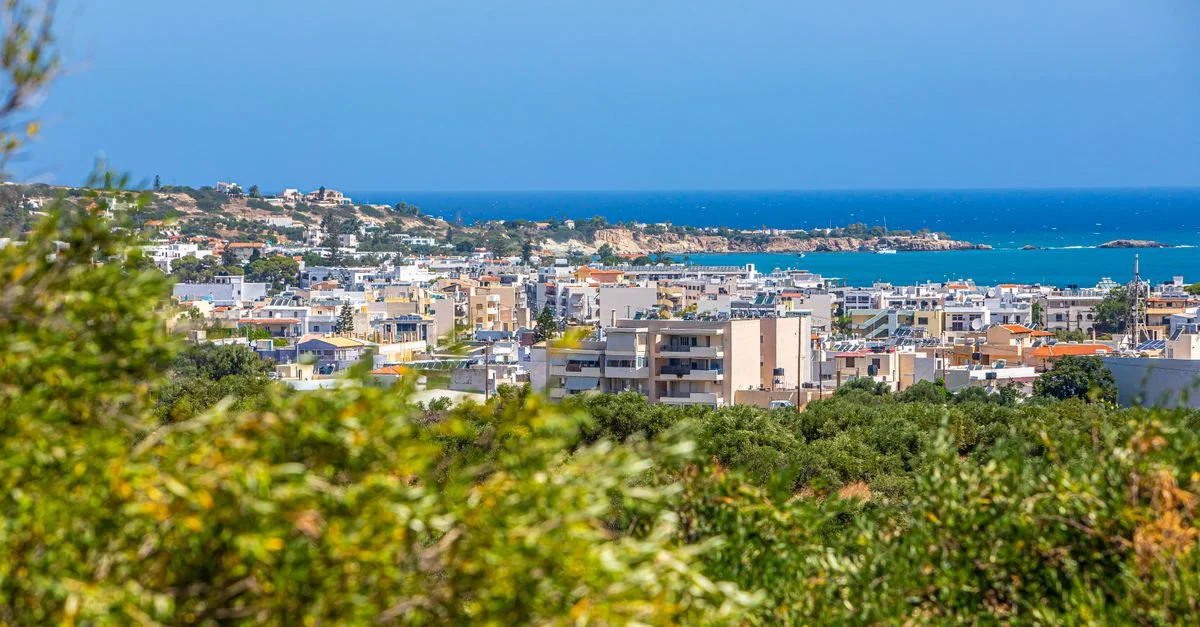
Choosing where to rest your head depends largely on whether you want immediate access to historical monuments, a quiet neighborhood vibe, or proximity to the sea. The Historic Center, enclosed by the massive Venetian walls, places you within walking distance of the major museums, pedestrian shopping corridors, and the old harbor. Accommodation here ranges from budget-friendly guesthouses tucked into restored Ottoman-era buildings to upscale boutique properties offering rooftop views of the fortress. Staying in the center means you can walk everywhere for dinner, though street noise can run high late into the night, particularly near the main squares.
Just outside the northern wall sits the Old Port area, a slightly more maritime-focused neighborhood ideal for travelers who enjoy morning views of fishing boats and proximity to the sea breezes. Mid-range options dominate this zone, featuring apartment rentals and small family-run inns where balconies overlook the Venetian harbor and the stone fortress guarding the entrance. It feels slightly calmer than the busy commercial core, yet remains connected to the center by a short walk through pedestrian tunnels beneath the busy coastal avenue.
For travelers seeking a quieter retreat with a local neighborhood feel, the areas south of the central market, such as Agia Triada, offer a glimpse into residential Cretan life. These districts feature budget-friendly rental apartments and small guesthouses where neighbors chat across narrow balconies and corner groceries sell local honey and cheese. If you prefer resort-style luxury with direct beach access, the coastal fringe stretching just east of the city center provides high-end hotel complexes with expansive pools and private stretches of coastline, though you will need a taxi or bus to reach the historic core.
Top Things to Do in Heraklion#
Your exploration of the city should begin at the Palace of Knossos, located just a short drive or public bus ride south of the center. This sprawling Bronze Age archaeological site brings the myths of King Minos, the Labyrinth, and the Minotaur into physical reality through its reconstructed throne rooms, lively frescoes, and massive storage magazines. To truly understand the artifacts recovered from this Minoan site, continue your journey to the Heraklion Archaeological Museum in the city center. This top-quality institution houses an impressive collection of prehistoric art, including the mysterious Phaistos Disc, intricate gold jewelry, and bull-leaping figurines that showcase the sophistication of an ancient civilization.
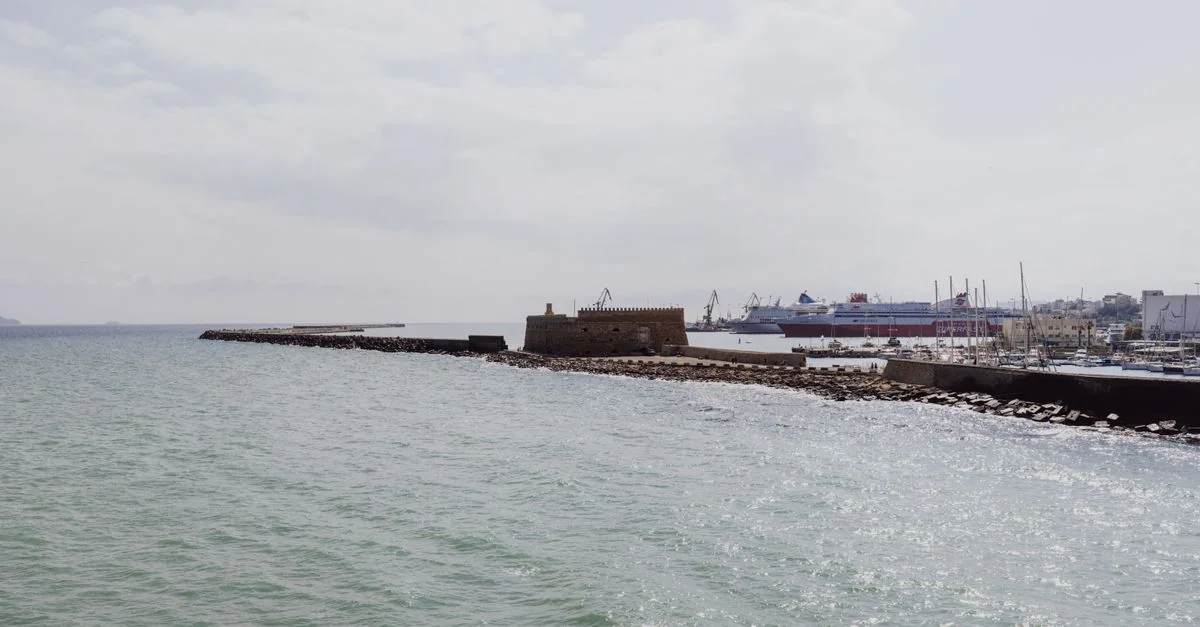
After soaking in ancient history, walk toward the harbor to admire the Koules Fortress, a heavy stone fortification built by the Venetians in the sixteenth century to protect their shipping lanes. Walking out along the stone breakwater toward the fortress offers sweeping views of the city skyline and the endless blue of the Cretan Sea, while the interior displays stone carvings and salvaged ship anchors. From here, stroll inland along 18th of August Street, a lively pedestrian corridor shaded by canvas awnings and lined with leather shops, bakeries, and traditional cafes where locals gather to drink iced coffee.
Midway down this pedestrian thoroughfare, you will encounter the Morosoni Lions Fountain, an ornate marble structure featuring water pouring from the mouths of four stone lions, serving as a classic gathering point for residents. Turn toward the nearby Heraklion Municipal Market, a covered arcade where vendors sell local herbs, mountain tea, bulk olives, and rounds of aged graviera cheese. For a quieter escape from the urban energy, seek out the Agios Minas Cathedral, one of the largest houses of worship in Greece , featuring dramatic interior iconography and a peaceful square shaded by palms. Finally, catch a local bus to the Heraklion Open-Air Market, held on different days of the week depending on the neighborhood, where farmers sell seasonal figs, massive watermelons, and fresh artichokes straight from the surrounding valleys.
Food and Dining Guide#
Cretan cuisine relies on simplicity, freshness, and olive oil that flows with a deep, peppery bite over almost every dish. Start your morning at a traditional bakery by ordering kalitsounia, small pastry pockets filled with sweet mizithra cheese or wild greens, baked until golden and flaky. For lunch or a casual tavern stop, look for dakos, a rustic dish featuring a twice-baked barley rusk softened by grated fresh tomato, crumbled sheep’s milk feta, a heavy pour of extra virgin olive oil, and a scattering of wild oregano.
When dining at a sit-down tavern in the evening, order several plates to share across the table rather than individual entrees. Essential dishes include chochlioi boubouristi, pan-fried snails crisped in olive oil with rosemary and red wine vinegar, and antikristo, a traditional preparation where chunks of young goat or lamb are roasted slowly around an open wood fire on iron skewers with coarse salt. Street food in the city centers on souvlaki, where pork or chicken skewers wrapped in warm pita bread are loaded with tomatoes, onions, yogurt-based tzatziki, and occasionally a handful of hot French fries tucked right inside the wrap.
Pair your meals with local wine varieties unique to the island, such as Vidiano for white or Liatiko for red, which trace their roots back thousands of years. Avoid tourist traps directly facing the ferry docks that display laminated picture menus in multiple languages, and instead seek out neighborhood taverns tucked down residential side streets where the menus are written on chalkboards in Greek and English. Expect your meal to conclude with a complimentary dessert—often chilled watermelon or semolina cake—accompanied by a small carafe of raki, the potent local grape spirit that is tossed back in a single motion to aid digestion.
Getting Around Heraklion#
Navigating the city and its surrounding region requires a mix of walking, public transit, and smart transportation choices. The historic center is remarkably compact and entirely pedestrianized in its main shopping and sightseeing zones, making walking the absolute best way to explore landmarks like the fortress, museums, and central squares. However, wearing sturdy shoes is essential, as the old stone paving can be slick, uneven, and occasionally steep as streets slope down toward the harbor.
For trips outside the immediate center, such as traveling to the palace ruins or nearby beaches, the local municipal bus network provides reliable, inexpensive service from the central bus stations. Tickets must generally be purchased from kiosks or automated machines before boarding, though some routes allow cash purchases at a slightly higher rate. Taxis are widely available near major squares and the port, but ensure the driver turns on the meter before departure, or agree on a fixed fare beforehand to avoid misunderstandings.
Renting a car is strongly recommended if you plan to venture beyond the city limits to explore mountain villages, secluded southern coves, or distant archaeological sites that public buses reach only infrequently. Driving habits in Crete can feel assertive to American visitors, with local drivers frequently using the paved highway shoulder as an unofficial passing lane, so defensive driving and patience are key. Parking within the historic center is notoriously difficult and strictly regulated, so look for paid underground or surface parking lots near the Venetian walls rather than attempting to hunt for street spots.
Budget Breakdown#
Planning your financial outlay for a trip to Crete requires understanding the tiered pricing structure that accommodates everything from backpackers to luxury seekers. Accommodation forms the largest variable in your daily budget, with budget travelers staying in hostels or simple family-run guesthouses typically spending between $35 and $70 per night for a clean, central room. Mid-range travelers can expect to pay $90 to $180 per night for comfortable boutique hotels or modern rental apartments featuring balconies and breakfast included. Luxury travelers looking for high-end resort amenities, sea views, and premium service will find prices starting around $250 and easily exceeding $500 per night during peak season.
Food expenses remain relatively reasonable compared to major capital cities in Western Europe or the United States , especially if you embrace local taverns and bakeries. A budget traveler can easily survive on $15 to $30 daily by grabbing bakery pastries for breakfast, street-food gyros for lunch, and sharing simple meze plates at a casual tavern for dinner. Mid-range diners spending $40 to $80 per day will enjoy sit-down taverns with multiple shared plates, local wine by the carafe, and leisurely café stops. Fine dining and upscale seafood restaurants featuring imported cuts and premium wine lists will push daily food costs well past $100 per person.
Transportation costs depend heavily on your itinerary style, with public city buses costing under $3 per ride, making transit virtually negligible for budget backpackers. Renting a mid-sized car runs roughly $40 to $70 per day depending on the season, plus the cost of gasoline, which sits at significantly higher per-gallon rates than typical American prices. Attraction entry fees, such as combined tickets for the palace ruins and archaeological museum, add around $20 to $30 total, keeping sightseeing costs modest unless you book private guided tours or boat excursions.
Travel Tips for Heraklion#
Language and Communication creates very few barriers for American travelers, as English is widely spoken by nearly everyone working in tourism, retail, and hospitality. Learning a few basic Greek phrases like “yasas” for hello and “efcharisto” for thank you goes a long way in showing respect, and locals visibly warm up when visitors attempt even the simplest local words.
Tipping Culture operates differently here than in the United States, where service charges are often built into the dining experience or expected at high percentages. Leaving a modest tip of five to ten percent in cash at taverns is appreciated and customary for good service, but servers do not rely on tips for their base survival wages the way American restaurant staff do.
Store Hours and Siesta can catch unprepared visitors off guard, as many independent shops close their doors in the afternoon between roughly 3:00 PM and 5:30 PM for a traditional rest period. While major supermarkets and souvenir shops in tourist zones stay open continuously, planning your shopping errands for the morning or early evening prevents locked doors.
Sun Protection is an absolute necessity given the intensity of the Mediterranean sun during the spring, summer, and early autumn months. Packing a wide-brimmed hat, polarized sunglasses, and a high-SPF sunscreen protects you during long hours exploring open-air archaeological sites that offer very little natural shade.
Water Safety concerns many American visitors who worry about drinking tap water in foreign destinations. Tap water within the city limits is generally safe to drink, though many locals and restaurants prefer bottled water due to mineral tastes or regional pipe variations, and bottled water remains inexpensive at every kiosk.
Cash and Card Usage requires a balanced approach, as while most restaurants and hotels accept major credit cards, having physical cash on hand is essential. Small bakeries, open-air farmers markets, rural bus tickets, and traditional mountain cafes often operate on a cash-only basis, making a trip to an ATM a necessary first step upon arrival.
📌 Disclaimer
Prices, schedules, tour details, flight routes, visa requirements, and all other information on this page are based on data at the time of writing. Fares, availability, and policies may change. Please verify current details on the official website before booking.
📌 More about Heraklion